How it knows
when to stop.
The hardest problem in a guided pour is not sensing — it is people. Notes from the bench on the light, the dry line, and building for real hands.
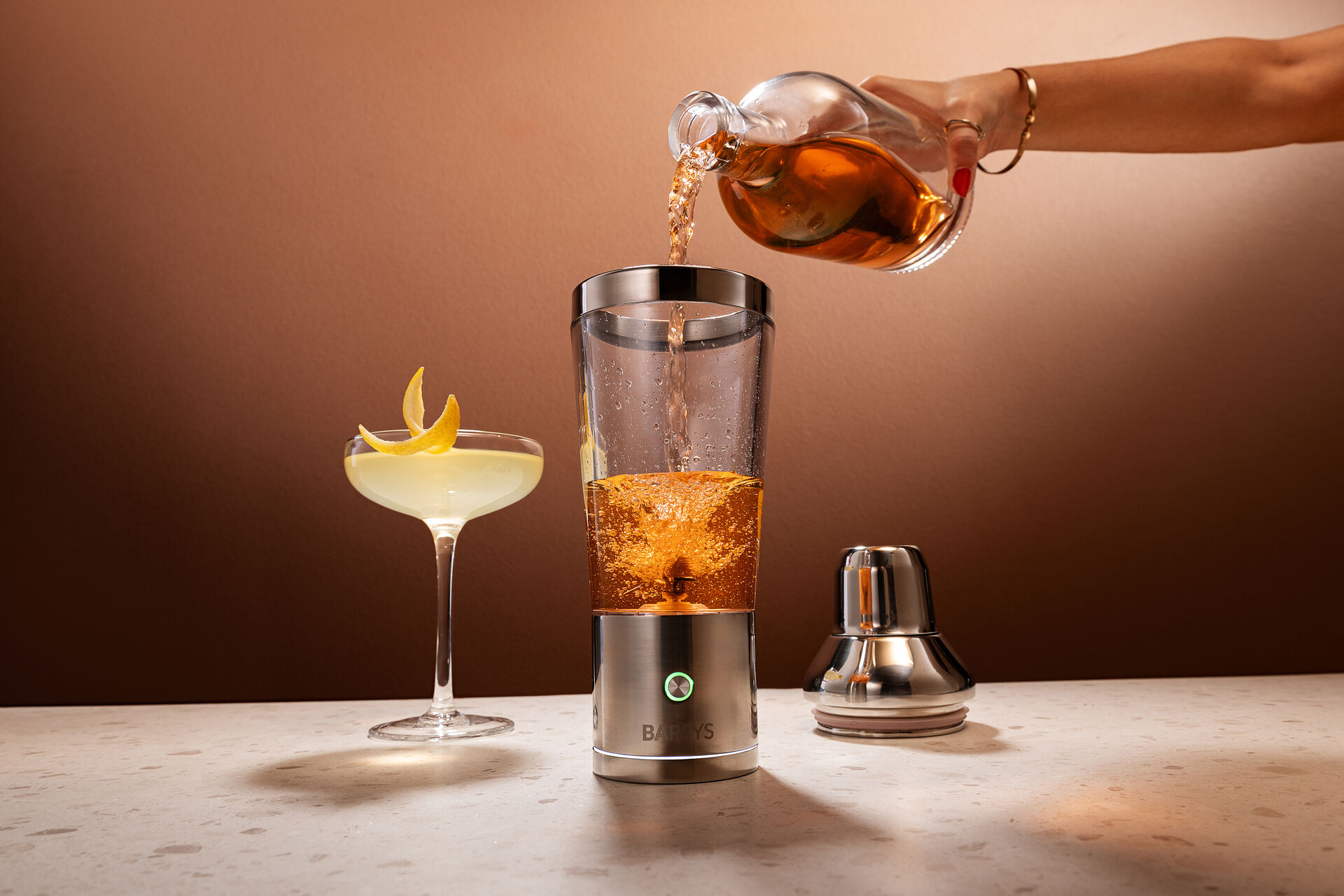
The hardest problem in a guided pour is not sensing — it is people. A bottle in a human hand delivers liquid in bursts: a glug, a hesitation, a correction. An instrument that ignores that reality gives you a reading; an instrument that respects it gives you a drink. The Shaker Pro was built around real pours from real hands.
Under the tin, the base measures continuously as you pour — every ingredient, live, to finer than a milliliter, about a thirtieth of an ounce. Exactly how the light is timed is the part we keep to ourselves; thousands of test pours went into it. What we can tell you is the result: a normal hand, stopping at normal speed, lands the pour on target. It feels less like reading an instruction and more like the instrument reading you.
One light, three verbs
The illumination is choreography, not decoration. Start: the base lights when the app hands it the next ingredient. Slow: as you approach target, the light changes character, and your hand eases off without your thinking about it. Stop: the terminal signal, tuned so the last drops in the air complete the measure rather than break it. People stop trusting instructions they have to read; they never stop trusting a light — the same reflex that makes traffic work.
The dry line
Everything electronic lives below what we call the dry line. The tin, cap and strainer above it are just honest bar steel — they come off and rinse like any shaker on earth. The base seals the sensing package, the radio and the cell behind it. Bluetooth 5.1 keeps the link to the Barsys AI app light and instant; the battery recharges over USB-C like your phone, because the last thing a bar needs is a proprietary cable. One cable in the box. Nothing else to buy, ever.
The app carries the intelligence: recipes, your taste profile, and the adaptive ratios that tune a build before you pour a drop. The base carries the reflexes. Split this way, the instrument stays fast where speed matters and the phone stays in charge of everything that can afford to think — which is why the first drink takes thirty seconds and the hundredth takes less.